
Light as a control signal.
Biology as the lever.
Fermeate is built to solve a simple problem: today's fermentation cost curves are constrained by a lack of control over the microorganisms doing the work
Why fermentation has always had a control problem
Fermentation companies spend enormous resources optimizing their microorganisms in the lab, fine-tuning genetics, selecting for yield, stabilizing strains. But once a run begins, that work is fixed. The biology is in motion and operators can only watch.
“The race car is speeding down the road, without a steering wheel.”
Fermeate changes that. By embedding light-sensitive protein switches into microbial genetic circuitry, we give producers the ability to send precise instructions to their organisms during the run; adjusting metabolism, shifting carbon utilization, or locking in production behavior at exactly the right moment.
How It Works
The mechanism, simply explained
Engineered switches
We incorporate light-responsive protein circuits into a production organism's genetics. These switches are dormant under normal conditions; they do nothing until activated by a specific wavelength of light.
The Fermeate module
A compact external unit connects to your existing bioreactor through standard access ports. During a run, it draws a small volume of culture broth, exposes it to a precisely timed pulse of light, and returns it to the tank.
Real time metabolic control
The light pulse triggers the genetic switch, which in turn triggers the expression of the target genes; from growth phase to production phase, from one carbon source to another, or into a drift-resistant configuration. The result is a fermentation run you can actively steer, not just observe.
Fungi, bacteria, yeast.
We have demonstrated the feasibility of the core technology on a wide range of both conventional (widely used in industry today) and non-conventional (not yet widely used) microbes, including both gram-positive and gram-negative bacteria as well as diverse yeast species.
If you have an existing production strain, our technology can likely be integrated directly into it.
Case Studies
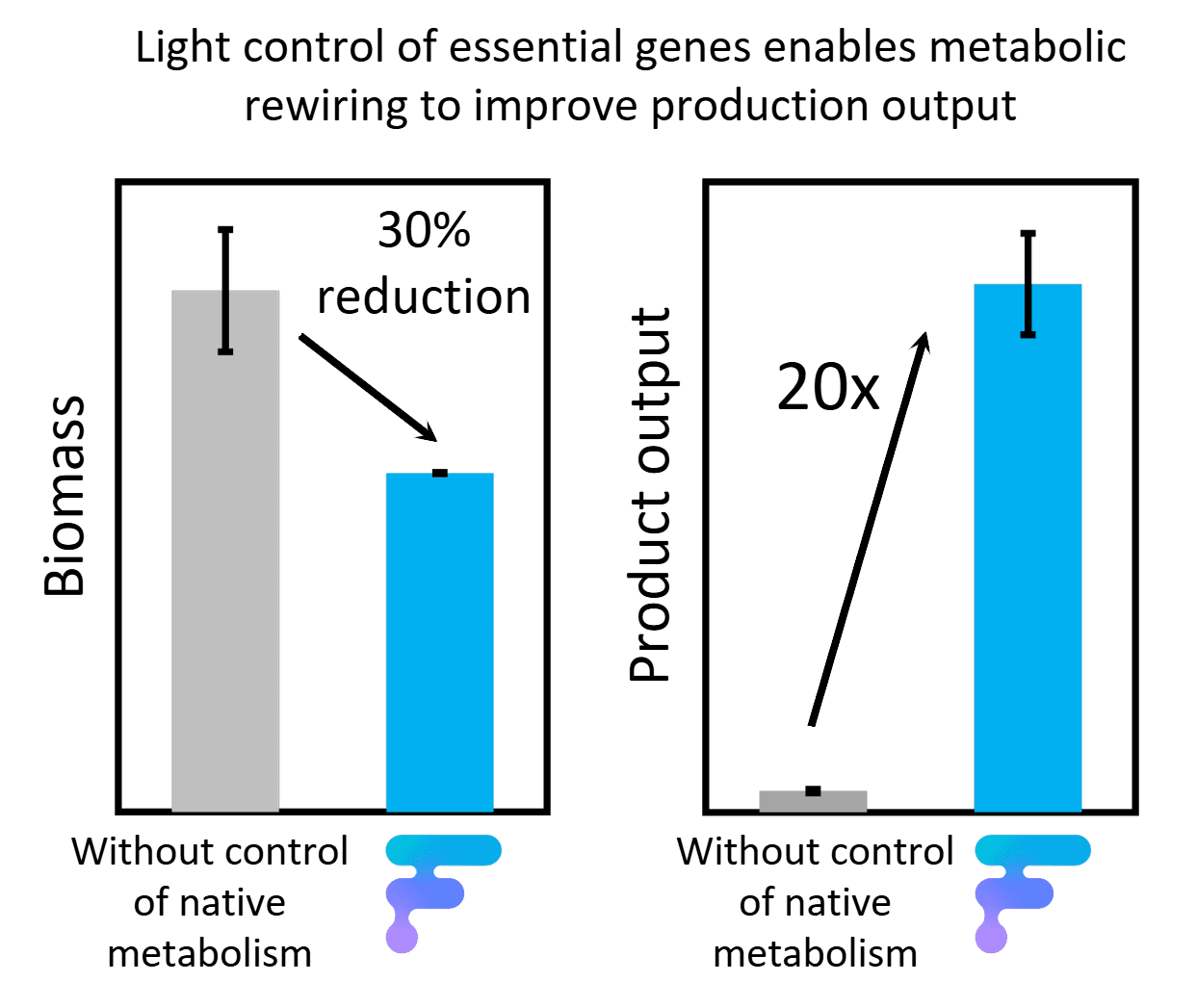
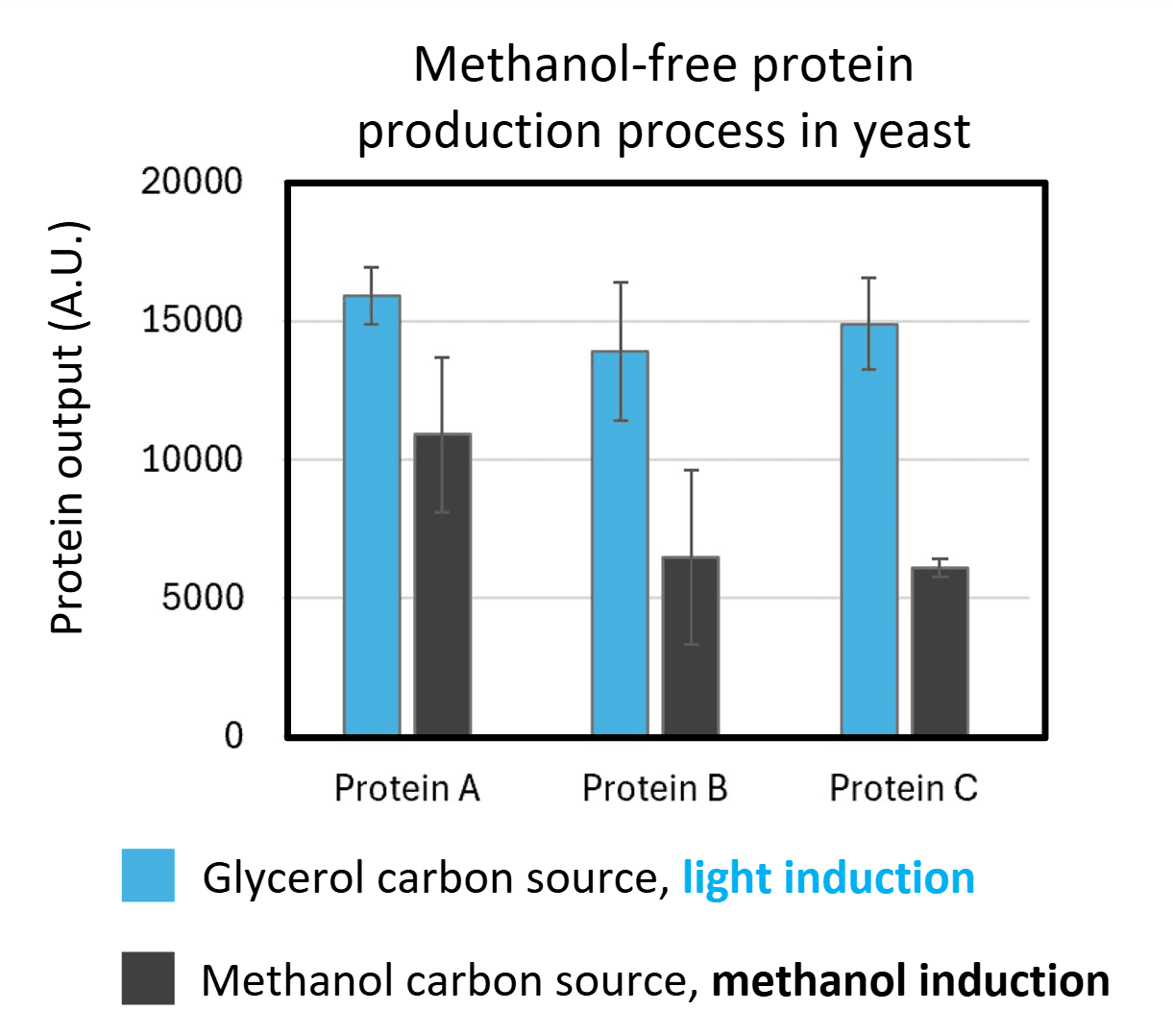
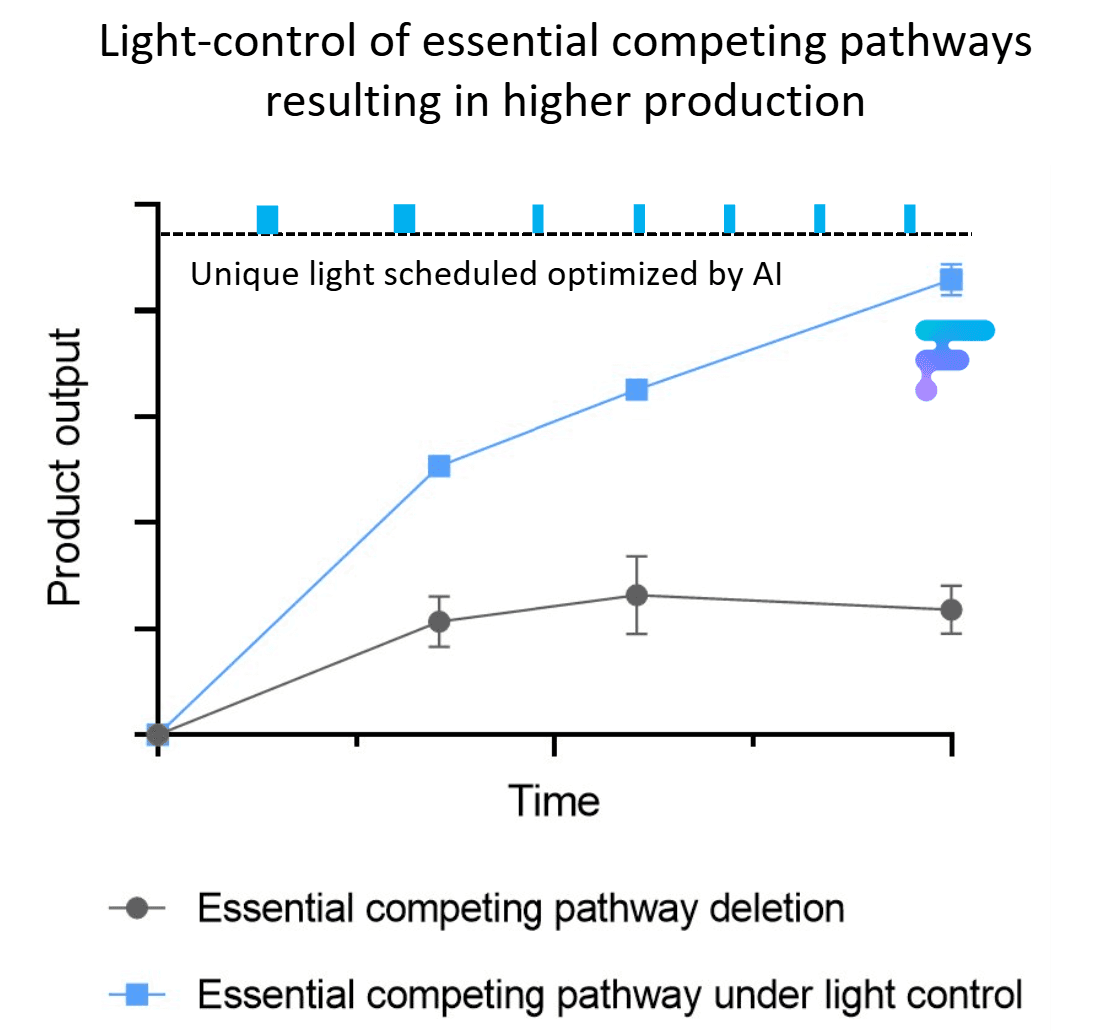
Light control of essential genes: 30% biomass reduction, 20× product output lift
Plug and play. No new capex. No new infrastructure.
Fermeate's hardware is an external unit. It connects through ports your tanks already have. There is no vessel modification and no process interruption to annoy your operators and engineers for installation.
The module is designed for industrial scale. The module to provide optogenetics capability for a 100,000-liter bioreactor is roughly the size of a 125-gallon water heater. No need to change floor plans either.
Industrial scale fermentation tank
80″ height × 30″ width
Conservative payback estimate: ~11 months